

A fire blazes in the night. Around it, bodies move in rhythm — drums pounding, voices rising, feet shaking the earth. The sound grows heavier, faster, until it stops being music and becomes something else entirely: a force that pulls the group into a trance, dissolving the line between human and spirit.
What’s strange is how familiar this scene is. Swap the jungle for tundra, replace the drums with rattles, trade the chant for hymns — and the story is the same. From Siberia to the Amazon, from Africa to Greece, cultures that never met all uncovered the same secret: music is the language of ritual.
Why did every society, across oceans and centuries, stumble onto this power? And what does it mean that the urge to turn sound into ceremony runs as deep as our own heartbeat?
Music Is the Oldest Spell
Unlike fire or writing, music didn’t need to be invented. It’s already inside us. Your first drumbeat was your mother’s heart. Your first melody was her voice. By the time humans stood upright, we were already carrying rhythm in our blood.
That’s why, whether it was a shaman in Siberia, a priest in Greece, or a healer in the Amazon, they all reached for the same tool: sound.
And they all found it did something… unnatural.
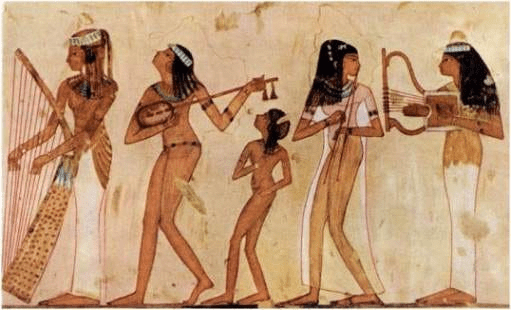
When the Drum Opens the Door
In Siberia, shamans call the drum their “horse.” Not a metaphor — they ride its rhythm into other worlds. At 4–7 beats per second, the pulse pushes the brain into theta waves, the state between waking and dreaming. They say the spirits meet them there.
Half a world away, Amazonian shamans sing icaros — haunting songs that “guide” visions in ayahuasca ceremonies. No drum, no trance. No song, no spirit.
And in Haiti, the Vodou drum doesn’t just call people to dance — it calls gods. Each rhythm belongs to a specific loa, a spirit. Play it correctly, and the spirit arrives. Miss the rhythm, and nothing happens.
Different lands. Different languages. The same discovery: rhythm doesn’t just move bodies — it opens doors.
The Invisible Force Everyone Feared
Think about it: sound is invisible. You can’t see it, but it shakes the air, rattles the body, makes people cry, laugh, or scream. For early humans, that was sorcery.
- The Greeks banned certain scales because they felt too dangerous.
- Medieval Europe whispered that the “Devil’s Interval” summoned evil.
- Folklore accused witches of fiddling at midnight, leading whole villages into frenzy.
When people couldn’t explain the power, they treated music like fire: sacred when controlled, terrifying when unleashed.
Why Every Culture Chose Music for Ritual
- It Changes the Mind. Chant long enough and reality bends. Neuroscience calls it brainwave entrainment. Shamans just called it traveling.
- It Unites the Group. One rhythm, one chant — suddenly a crowd is one body. That’s power.
- It Feels Like Magic. What else can stir emotion, summon visions, and carry prayers on invisible waves?
Modern Rituals, Ancient Echoes
You’ve already felt it. The bass drop at a concert. The national anthem before a game. A hymn at a funeral. These aren’t just performances — they’re rituals wearing modern clothes.
The same technology that shamans and witches used still works on us. A stadium of 50,000 fans chanting in unison is not so different from a circle of villagers around a fire. Different stage, same spell.

And I can’t help but think — the people who put on these events know exactly what they’re doing. They’re not just entertainers. They’re energy harvesters. That collective emotion, that synchronized focus, that electric high — it doesn’t just disappear. It goes somewhere. Maybe they bottle it. Maybe they feed off it. But one thing’s for sure: it’s not accidental.
The Unsettling Truth
Every culture that ever lived stumbled onto the same secret: music is the key to crossing thresholds. Whether the goal was summoning gods, uniting tribes, or touching the dead, they all reached for rhythm and chant.
They didn’t copy each other. They didn’t trade the knowledge. They found it because it was already there, waiting inside the human body.
And maybe that’s the strangest part. Music doesn’t feel invented. It feels remembered as if it’s older than us, as if it’s been echoing since the first heartbeat.