
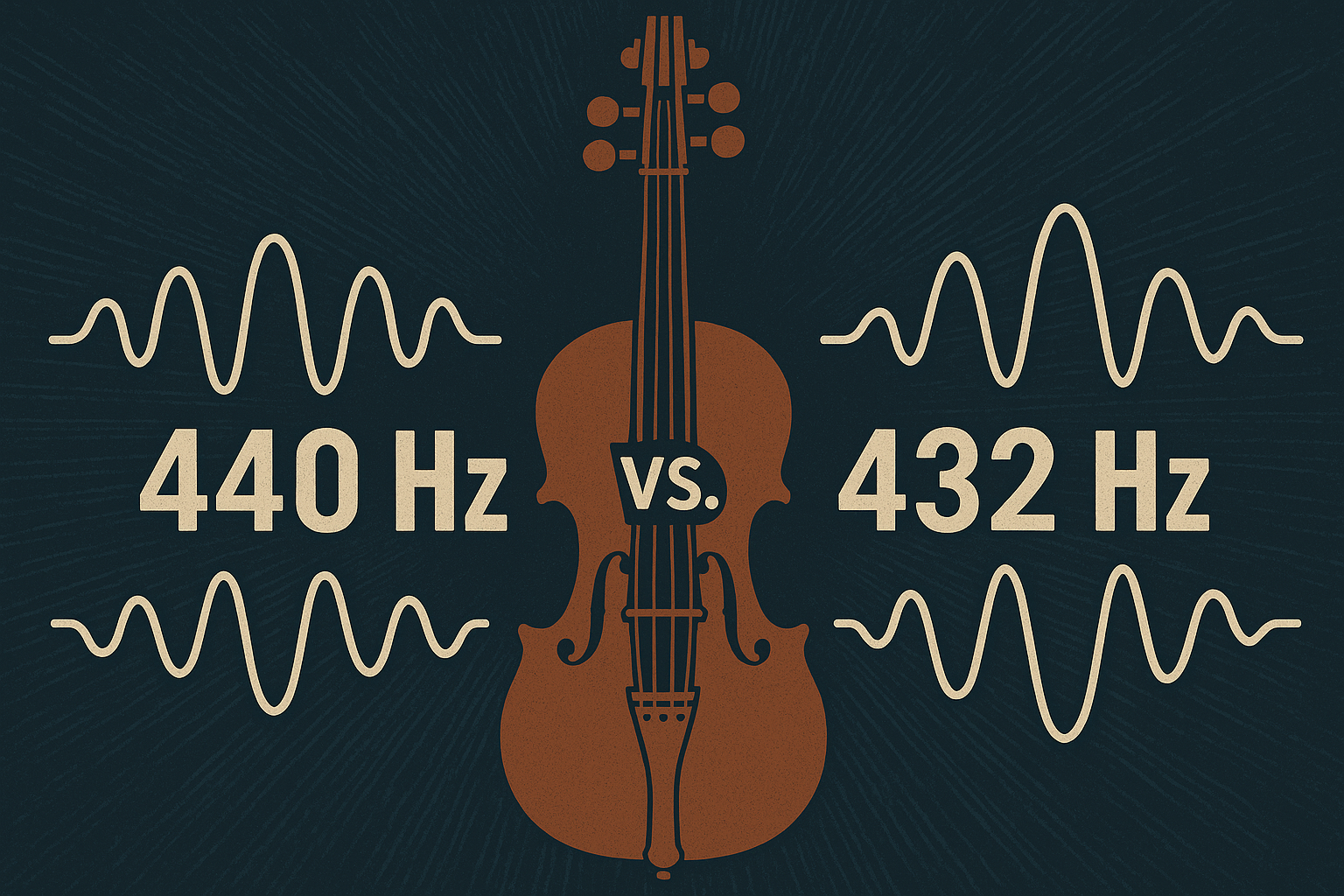
Music is vibration. Every note you’ve ever heard carries a frequency that shapes how it feels in your body and your mind. Today, nearly all music around the world is tuned to 440 Hz—a standard quietly established in the 20th century. But for centuries before that, instruments were tuned differently, often to 432 Hz.
This single shift changed the way the world hears sound.
The Shift to 440 Hz
In 1939, a group of powerful organizations pushed for the world to adopt 440 Hz as the new standard. The official reason? Consistency. They wanted every orchestra, every piano, every guitar across the globe to match perfectly.
But consistency wasn’t the only outcome. This decision changed the emotional foundation of music itself. Suddenly, everything you heard—from the radio to concerts—carried a slightly sharper, more urgent edge.
What 440 Hz Does to the Human Mind
Think about how certain sounds make you feel. Nails on a chalkboard? Instant stress. Ocean waves? Instant calm. Frequencies matter.
- 440 Hz keeps the body on alert. It creates a subtle tension, like background static you can’t shake.
- It agitates without you noticing. Over time, it can leave you restless, uneasy, even anxious.
- It makes us easier to influence. When the soundtrack of daily life keeps you slightly unsettled, you’re more likely to seek distractions, consume more, and question less.
It’s not loud or obvious—it’s subtle. That’s what makes it powerful.

Why 432 Hz Feels Different
Now compare that to 432 Hz. People who listen to it describe the difference immediately:
- The music feels warmer and more inviting.
- Your breathing slows, your body relaxes.
- It feels like the sound is working with you, not against you.
- It’s in harmony with patterns found in nature—cycles, rhythms, even the human heartbeat.
432 Hz doesn’t just sound good—it feels right.
A Hidden Influence
Here’s the thought that lingers: if 432 Hz naturally calms us, grounds us, and makes us feel connected, why was it quietly replaced with 440 Hz?
Was it really just about “standardization”? Or was there another reason—a reason tied to how music affects our emotions, our focus, and our state of mind?
After all, if you control the soundtrack of the world, you also shape how people feel as they live in it.
The Final Note
You don’t need to take anyone’s word for it. Try it yourself: listen to this video and decide which one is more calming.